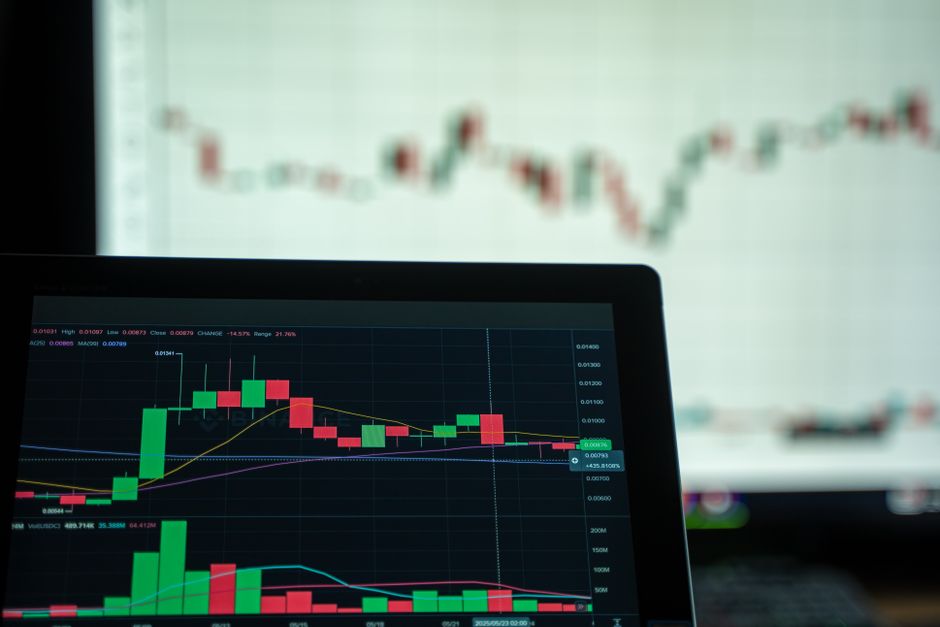
Paper Trading Done Right: How to Practice Before You Risk a Single Dollar
Here’s a number that should stop you cold: studies consistently show that 70–80% of retail day traders lose money. Not over a bad month. Over their entire trading careers. And if you dig into the wreckage, you’ll find one pattern repeated over and over — people went live too soon. They skipped the practice phase, or they did it wrong, and they paid for that shortcut in real dollars.
Paper trading — simulating trades without real money — is supposed to be the solution to this. And it can be. But most people treat it like a formality, a box to check before the “real” journey starts. They paper trade for two weeks, hit a few winners, convince themselves they’ve cracked it, and blow up their account within three months of going live.
This guide is about doing paper trading properly. That means treating it with the same seriousness as real trading, using it to answer specific questions, and knowing — with actual data, not gut feeling — when you’re ready to put real capital on the line. Think of this as the guide nobody gave you before you opened your first brokerage account.
Background: Why Paper Trading Exists (and Why Most People Waste It)
Paper trading has roots in floor trading culture, where new traders would practice “on paper” before being trusted with firm capital. The concept is simple: you simulate buying and selling assets using a demo account or a spreadsheet, tracking your performance as if the money were real — without the financial consequences of being wrong.
In 2025 and beyond, nearly every major trading platform offers a built-in paper trading mode. Platforms reviewed for day traders in 2026 — including stalwarts like Thinkorswim (TD Ameritrade/Schwab), Interactive Brokers, and crypto platforms like BingX and MEXC — all offer demo or testnet environments where you can trade with virtual funds against live market data. There’s genuinely no excuse not to use them.
And yet, paper trading gets a bad reputation in trading communities. You’ll hear things like: “Paper trading doesn’t teach you anything because you can’t replicate the emotions.” This criticism is partially valid — but it’s also used as a cop-out by people who want to skip the work. The emotional gap between paper and live trading is real, but it doesn’t make paper trading useless. It just means you have to approach it strategically to get value from it.
The real problem isn’t paper trading itself. It’s how most people do it:
- They don’t set clear, measurable goals for what they’re testing.
- They don’t treat it with the same discipline they’d apply to real money.
- They stop too early, after a lucky streak rather than a statistically significant sample.
- They skip the companion step: backtesting.
Let’s fix all of that.
Step One: Backtesting — The Foundation You’re Probably Skipping
Before you paper trade a single strategy, you should backtest it. These two practices are often conflated, but they’re different tools that answer different questions.
Backtesting involves applying your trading rules to historical price data to see how the strategy would have performed in the past. Paper trading then validates whether you can actually execute that strategy in real-time conditions — with all the noise, uncertainty, and decision fatigue that comes with it.
According to Binance’s breakdown of backtesting methodology, there are two primary approaches:
| Method | How It Works | Best For |
|---|---|---|
| Manual Backtesting | Trader scrolls through historical charts and manually logs hypothetical trades | Discretionary traders learning pattern recognition |
| Automated Backtesting | Software runs your rules across historical data and spits out performance metrics | Systematic/algo traders; faster iteration |
IG Group’s guide on backtesting highlights the key metrics you need to extract from any backtest before you even think about going live or paper trading:
- Win rate: What percentage of trades are profitable?
- Risk/reward ratio: On average, how much do you make vs. lose per trade?
- Maximum drawdown: What’s the worst peak-to-trough loss your strategy has experienced?
- Profit factor: Total gross profit divided by total gross loss (anything above 1.5 is generally acceptable; above 2.0 is solid)
- Sharpe ratio: Risk-adjusted returns — are you being compensated fairly for the volatility you’re absorbing?
The Minimum Data Requirement
One of the biggest backtesting mistakes is testing over too short a period. If you backtest a strategy over six months in a bull market and declare it validated, you’ve essentially tested nothing. You need:
- At least 2–3 years of historical data covering different market regimes (trending, ranging, volatile, low-volatility)
- A minimum of 100 trades in your backtest sample — anything less isn’t statistically meaningful
- Testing across multiple instruments if you plan to trade multiple markets
The Overfitting Trap
Here’s something the backtest tutorials often gloss over: overfitting. This is when you tweak your strategy parameters so many times on the same historical data that the strategy looks incredible on paper — but only because it’s been optimized for that specific dataset. It will fall apart on live data.
The fix: use out-of-sample testing. Split your historical data into two periods. Develop and optimize your strategy on the first period (in-sample), then test it cold on the second period (out-of-sample) without touching the parameters. If performance holds up, you have something worth paper trading. If it collapses, back to the drawing board.
Step Two: Setting Up Your Paper Trading Environment Correctly
Most traders open a demo account, start clicking buttons, and think they’re paper trading. They’re not — they’re playing a video game. Proper paper trading requires deliberate setup.
Choose a Platform That Mirrors Your Live Setup
Your paper trading environment should be as close to your intended live environment as possible. If you’re planning to trade crypto on BingX or MEXC, use their testnet or demo features — not a generic stock trading simulator. Execution speed, interface, available order types, and fee structures all differ by platform, and these details matter.
For crypto traders specifically, platforms like BingX offer paper trading modes for futures with realistic leverage settings. MEXC similarly provides simulated trading environments. The 2026 landscape for crypto exchanges has matured significantly — you no longer need to go live to get a realistic feel for how a platform behaves under pressure.
For equity day traders, Thinkorswim’s paperMoney feature is the gold standard — it uses real Level 2 data and allows you to simulate complex options strategies alongside equity trades.
Use Realistic Position Sizing
This is where most paper traders completely lose the plot. They’re allocated $100,000 in virtual money, and they start swinging $50,000 positions because, hey, it’s not real. Don’t do this.
Before you start paper trading:
- Decide exactly how much real capital you plan to eventually deploy
- Set your demo account to that exact amount (or as close as the platform allows)
- Apply your actual position sizing rules — whether that’s risking 1% per trade, a fixed dollar amount, or a volatility-adjusted size
If you plan to go live with $10,000, paper trade with $10,000. The psychological work comes from making decisions that feel proportionate to what’s actually at stake for you.
Paper Trade at the Right Times
If you plan to be an active day trader during the first hour of the NYSE session (9:30–10:30 AM ET), you need to paper trade during that exact window. Not during lunch. Not after hours with different volatility profiles. Market character changes throughout the day and throughout the week — your paper trading should reflect when you’ll actually be active.
Keep a Trading Journal From Day One
This is non-negotiable. Every single paper trade needs to be logged with:
- Entry price, exit price, position size
- The specific setup or signal that triggered the trade
- Your emotional state at entry and exit (yes, even in paper trading)
- What you expected vs. what happened
- What you’d do differently
The journal is where the real learning happens. It forces you to articulate your reasoning, and it gives you something concrete to review and improve from. Traders who don’t journal are just spinning their wheels.
Step Three: What You’re Actually Testing (And How to Know When You’ve Passed)
Here’s the viewpoint you won’t find in most “intro to paper trading” articles: paper trading is a structured test, not an open-ended practice session. You need defined pass/fail criteria before you start. Otherwise you’ll either quit too early after a bad week, or drag it on forever because you’re afraid to go live.
The Four Things Paper Trading Should Validate
1. Strategy edge exists in real-time conditions
Your backtest showed a 55% win rate and a 1.8 profit factor. Does that hold up when you’re executing in real-time with real spreads, slippage, and the pressure of making decisions in seconds? Paper trading answers this. You’re looking for performance that roughly tracks your backtest results — not identical numbers, but in the same ballpark. A strategy that backtests at 55% wins but paper trades at 38% wins has a problem.
2. You can execute your rules consistently
Knowing your rules and following them under pressure are two completely different skills. Paper trading is where you build the muscle memory. Track your rule adherence rate — how often did you take a trade that didn’t fit your criteria? How often did you exit early out of phantom fear? You’re aiming for 90%+ rule adherence before you go live.
3. Your position sizing and risk management work in practice
Does your account size support the position sizes your strategy requires? Are you hitting any platform-specific limitations (minimum order sizes, margin requirements) that would affect your live trading? Paper trading surfaces these friction points safely.
4. You can handle drawdowns psychologically
Every strategy has losing streaks. Your backtest probably showed a maximum consecutive loss run of 6–8 trades. Paper trade until you’ve experienced something close to that — and observe how you respond. Do you start revenge-trading? Do you abandon the strategy mid-drawdown? These patterns will be amplified with real money. Better to identify them now.
Setting Your Go-Live Criteria
Here’s a concrete framework for deciding when you’re ready:
| Criterion | Minimum Threshold |
|---|---|
| Number of paper trades completed | 100+ trades |
| Duration of paper trading period | Minimum 3 months (covering different market conditions) |
| Win rate vs. backtest expectation | Within 5–10 percentage points |
| Profit factor | Above 1.3 (live will likely be slightly worse) |
| Rule adherence rate | 90% or higher |
| Largest drawdown experienced | Must have survived at least one 5–10% drawdown without breaking rules |
| Journaling consistency | Every trade documented with rationale |
If you can check every box on this table, you’re not just ready to go live — you’re prepared. There’s a meaningful difference.
Multiple Perspectives: What the Critics Get Right (And Wrong)
The “Emotions Aren’t Real” Argument
The most common critique of paper trading is that the psychological experience doesn’t translate to live trading. When real money is on the line, cortisol spikes, decision-making deteriorates, and previously automatic rules suddenly feel optional. This is completely true.
But critics who use this to dismiss paper trading entirely are making a logical error. The fact that paper trading doesn’t perfectly replicate live trading doesn’t mean it provides no value. You can’t learn to drive a race car at full speed on day one. The simulator exists to build foundational skills that persist even when conditions change.
The smarter approach: treat the emotional gap as something to close gradually. After paper trading, consider a micro-live phase — go live with 10–20% of your intended capital. This introduces real stakes without catastrophic downside. The sequence is: backtest → paper trade → micro-live → full live.
The “Paper Trading Builds Bad Habits” Argument
Some experienced traders argue that paper trading actually reinforces bad habits — specifically, being too aggressive because there are no real consequences. This is a legitimate concern, which is exactly why position sizing discipline (as discussed above) is so critical. If you paper trade with proportionate position sizes and treat every virtual loss as if it came out of your actual bank account, you significantly reduce this risk.
The “It Takes Too Long” Argument
Impatient traders often dismiss the recommended 3+ month paper trading period as excessive. And if all you’re doing is validating one simple strategy in a trending market, maybe 3 months is sufficient. But if you’re planning to trade full-time, manage meaningful capital, or trade complex instruments like options or leveraged crypto derivatives, 3 months is a floor, not a ceiling. The traders who skip this step are the ones funding the winners’ accounts.
Impact and Outlook: How the 2025–2026 Trading Landscape Changes the Calculus
The trading environment in 2025–2026 has changed in ways that make proper paper trading more important than ever — and simultaneously more accessible than ever.
Regulatory Shifts Are Raising the Stakes
Regulatory bodies across multiple jurisdictions have been tightening rules around retail leveraged trading. The PDT (Pattern Day Trader) rule in the US requiring $25,000 minimum equity for active day traders has been a long-standing hurdle. New regulations around crypto derivatives leverage (with many platforms capping at 10x or 20x for retail traders) mean that strategy performance can look very different under different leverage regimes.
Paper trading lets you simulate the exact regulatory environment you’ll be trading in — including leverage caps, margin requirements, and position limits — before you commit capital to a broker or exchange.
AI-Assisted Trading Tools Are Everywhere
The proliferation of AI-based trading assistants and signal providers in 2025 means traders now have access to sophisticated tools that were previously institutional-only. But this also means there’s more noise than ever. Paper trading AI-generated signals before trusting them with real capital is especially important — an AI signal that backtests beautifully but generates 15% drawdown in the first month of live trading needs to be caught in the paper phase, not the live phase.
Crypto Complexity Has Increased
The crypto market in 2026 offers instruments that didn’t exist a few years ago — perpetual futures with funding rates, complex DeFi yield strategies, tokenized real-world assets. Each new instrument type requires its own learning curve. Platforms like BingX and MEXC have expanded their product offerings significantly, and each product has its own mechanics that need to be understood before real money goes in.
The takeaway: the complexity of available instruments has grown faster than most traders’ understanding of those instruments. Paper trading the new stuff before going live isn’t just prudent — it’s essential due diligence.
Key Takeaways: Your Paper Trading Checklist
Before going live, work through this checklist completely:
Pre-Paper Trading (Backtesting Phase)
- ☐ Defined clear, written trading rules (entry, exit, position sizing, risk management)
- ☐ Backtested strategy over at least 2 years of data across different market regimes
- ☐ Generated minimum 100 trades in backtest
- ☐ Recorded win rate, profit factor, max drawdown, and Sharpe ratio
- ☐ Completed out-of-sample test to check for overfitting
- ☐ Results meet minimum acceptable thresholds (profit factor > 1.5, max drawdown tolerable)
Paper Trading Setup
- ☐ Selected demo environment that matches intended live platform
- ☐ Set account size to match planned live capital
- ☐ Applied actual position sizing and risk rules (no oversizing)
- ☐ Committed to trading only during intended active hours
- ☐ Set up trading journal (digital or physical)
During Paper Trading
- ☐ Logging every trade with full rationale and emotional notes
- ☐ Reviewing journal weekly for patterns and rule violations
- ☐ Tracking rule adherence rate (targeting 90%+)
- ☐ Not adjusting strategy mid-test based on short-term results
- ☐ Continuing through at least one meaningful drawdown period
Go-Live Decision Criteria
- ☐ 100+ paper trades completed over 3+ months
- ☐ Live performance roughly tracks backtest expectations
- ☐ Rule adherence rate consistently above 90%
- ☐ Survived a drawdown without breaking rules
- ☐ Every trade documented; review complete
- ☐ Plan for micro-live phase before full capital deployment
Conclusion: The Practice That Separates the Serious From the Hopeful
Paper trading properly is uncomfortable in the best way. It forces you to confront whether your strategy actually has an edge before the market does it for you — at full cost. It demands discipline when there are no real consequences for being sloppy. And it requires patience in an activity that constantly tempts you to rush.
The traders who skip this process — or who go through the motions without real rigor — are essentially gambling. They’re mistaking excitement for edge, and confidence for competence. The markets are extraordinarily good at separating those two things.
But the traders who commit to the process? They show up to their first live trades with something genuinely rare: data-backed confidence. Not “I feel good about this” confidence, but “I have 200 documented trades showing this strategy works and I know exactly how to execute it” confidence. That’s a fundamentally different starting position.
The market will always be there. Your capital won’t always be. Take the time to do this right.
This article is for information only and is not financial advice.